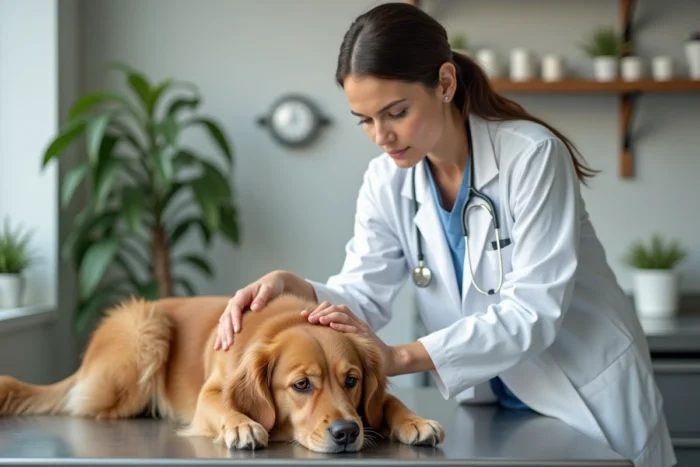
An animal followed only during occasional consultations accumulates silent imbalances: chronic stress, nutritional deficiencies compensated too late, undetected sedentariness. For several years, we have observed a shift towards an integrated approach, where each care fits into a global well-being journey rather than being an isolated response to a symptom. This article details the technical pillars of this approach for dogs, cats, and small pets.
Connected monitoring and tele-veterinary care: the foundation of animal health journey
Veterinary telemedicine has established itself as a full-fledged preventive relay. Teleconsultation platforms allow for quick symptomatic triage, dosage adjustments between two physical visits, and post-operative follow-up without stressful travel for the animal.
Connected devices (GPS collars with activity sensors, scales integrated into bowls, behavioral cameras) provide longitudinal data that the veterinarian uses to detect a decrease in mobility or a change in eating rhythm before any clinical manifestation. Connected monitoring detects weak signals that are invisible in a traditional consultation.
We recommend pairing these tools with a shared digital health record between the treating veterinarian, the behaviorist, and the groomer. This centralization avoids duplicate care and interactions between dietary supplements and medication treatments. To explore the care offered by 4 Pattes d’Amour, this coordinated journey logic is a good starting point.
Animal nutraceuticals: prebiotics, antioxidants, and joint active ingredients
According to a study published by Seppic in 2024, French pet owners are increasingly seeking nutraceutical supplements for their animals, in a logic of humanizing the animal considered as a family member. This trend is not a gimmick: prebiotics, antioxidants, and joint active ingredients meet documented physiological needs.
Prebiotics (fructo-oligosaccharides, inulin) nourish the intestinal microbiota of dogs or cats and strengthen the digestive barrier. For breeds predisposed to joint disorders, active ingredients like chondroitin or hydrolyzed collagen slow down cartilage degradation when administered before the first signs of stiffness appear.
Stress management through nutraceuticals
Supplements based on L-theanine, alpha-casozepine, or magnesium target situational anxiety (transport, storms, separation). Their effectiveness depends on the dosage and timing of administration, often poorly calibrated without veterinary support. An animal behaviorist can refine the protocol by identifying specific stress triggers in the animal.
Nutraceuticals do not replace veterinary pharmacology. They articulate with it, either upstream or as a complement, within a structured prevention framework.
Living environment: adapting home, office, and city to the animal
Animal well-being is not limited to what is administered or prescribed. The daily environment conditions the baseline stress level, sleep quality, and energy expenditure. Three contexts deserve particular technical attention.
- At home, the cat needs vertical space (cat trees, wall shelves) and retreat areas separate from passageways. A cat without access to height more frequently develops stress-related urinary disorders.
- In an office or coworking space that accepts animals, the dog should have an identified fixed spot (bed, cooling mat), away from repetitive noise sources (printers, doors). Olfactory stimulation (digging mats, stuffed Kongs) compensates for the absence of free roaming.
- In urban environments, identification by microchip remains the first safety gesture. The I-CAD barometer regularly shows that cats are significantly less well identified than dogs in France, complicating their care in case of escape or accident.
Small pets: specific environmental needs
For new pets (rabbits, ferrets, reptiles), the living environment directly impacts health. A rabbit kept in too small an enclosure develops pododermatitis. A reptile with poorly calibrated thermal gradients stops eating. These parameters are as much about care as the veterinary consultation itself.
Naturopathy and animal massages: framework and limits
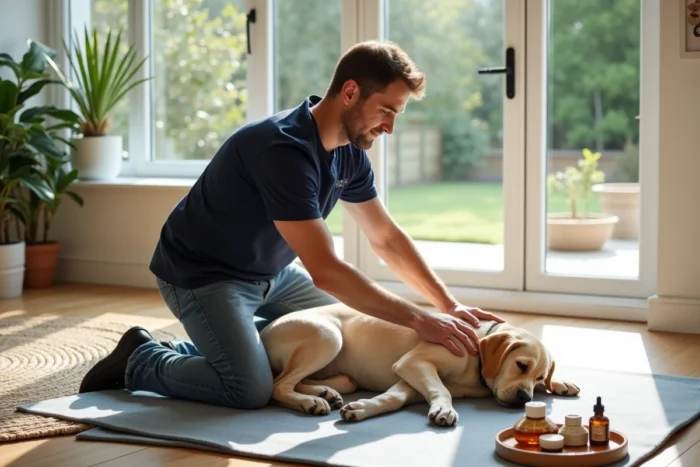
Animal naturopathy and canine or feline massage are gaining visibility. We observe that their integration into a global well-being journey provides measurable benefits for muscle recovery (sporting dogs, elderly animals) and chronic anxiety management.
Animal massage is not a veterinary act and should never replace a medical diagnosis. Its value lies in the early detection of tensions, painful areas, or bodily changes that the practitioner then reports to the treating veterinarian.
Phytotherapy applied to animals requires particular vigilance: some essential oils are toxic to cats (phenols, ketones), and dosages differ radically between species. Any complementary practice must be coordinated with the referring veterinarian, not done in parallel.
Building a coherent prevention journey for dogs, cats, or small pets
The French pet market has been driven for several years by a growing demand for premium and personalized health and wellness solutions, as highlighted by the analysis from Echos Études. This dynamic reflects a maturity among owners who are no longer satisfied with a fragmented approach.
A coherent prevention journey articulates five building blocks:
- An annual veterinary check-up (or semi-annual for senior animals) supplemented by intermediate teleconsultations to adjust ongoing protocols.
- A nutraceutical program tailored to the species, breed, age, and lifestyle, reassessed with each change of context (moving, arrival of another animal, change in activity).
- A connected follow-up that feeds a shared dashboard among the participants (veterinarian, behaviorist, groomer).
- An audited and adapted living environment, including in professional spaces that welcome animals.
- Up-to-date identification and a health insurance plan calibrated to the animal’s actual risk profile.
Treating each care in isolation amounts to managing symptoms. Assembling them into a structured journey is about prevention. The difference is measured in the healthy lifespan of the animal, not just in the absence of disease.