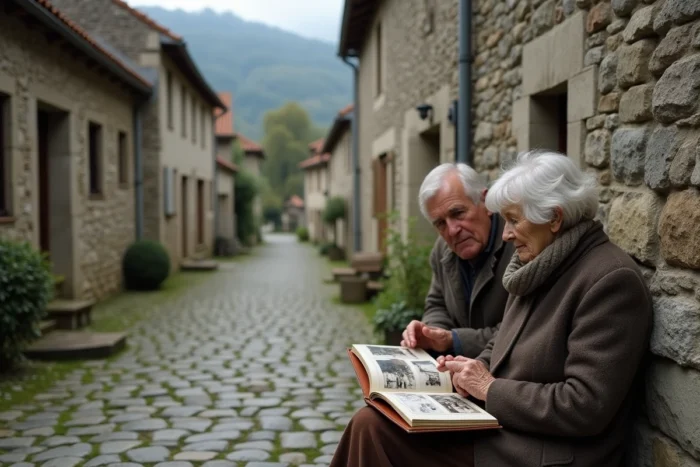
When a geneticist receives a patient carrying a rare autosomal recessive disease, the first question that arises concerns the family history. In mainland France, unions between close relatives have become statistically rare, but their traces persist in the genomes of certain regional populations. Understanding where and why these genetic signatures concentrate remains a concrete public health issue.
Homozygosity and Recessive Diseases: The Mechanism to Know
Consanguinity is referred to when two parents share one or more common ancestors. The direct result on the genome of their offspring is an increase in homozygous segments. In practice, this means that the child inherits two identical copies of the same genetic variant, even if it is deleterious.
This phenomenon deviates from Hardy-Weinberg equilibrium: the frequency of homozygous genotypes increases, while that of heterozygotes decreases. Autosomal recessive diseases find a favorable ground here. Tunisian data illustrate this mechanism well: autosomal recessive diseases represent the majority of reported genetic diseases, with potential consanguinity in the vast majority of affected families.
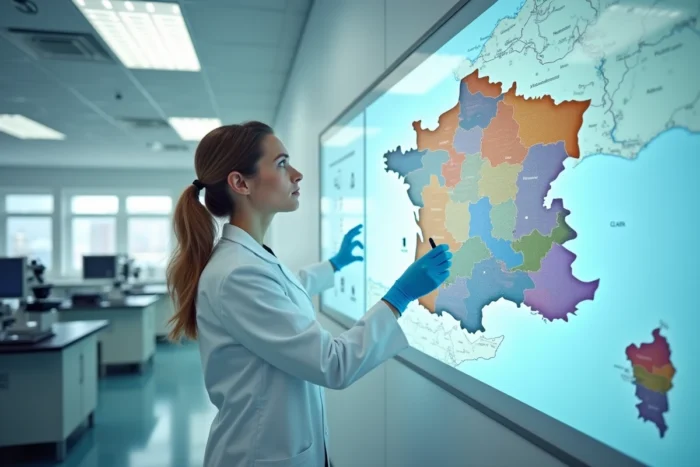
Reading a map of consanguinity in France allows one to identify areas where this risk of homozygosity remains more pronounced, even if overall rates have dropped since the mid-20th century.
Regional Disparities in France: Geographic Isolation and Local Endogamy
The distribution of consanguinity across French territory has never been uniform. Historical studies from the period 1926-1958 show clear geographic variations. Higher rates are found in mountainous areas, enclosed valleys, and certain rural regions where marriage pools remained restricted.
Factors Concentrating Consanguinity in Certain Areas
- Geographic isolation (Alpine valleys, Pyrenean areas, islands) mechanically limits the choice of spouse and promotes unions between relatives over several generations.
- Village endogamy, linked to local traditions of land inheritance, has long pushed families to marry their children within a restricted perimeter.
- The low mobility of rural populations before the widespread use of automobiles and rural exodus maintained narrow genetic pools for decades.
With urbanization and population mixing from the second half of the 20th century, consanguineous marriages have significantly declined in mainland France. Urban areas now show negligible rates. Returns vary on this point for certain island or very rural micro-populations, where traces of ancient endogamy persist.
Animal Consanguinity in France: A More Pressing Issue than in Humans
The current debate on consanguinity in France concerns less humans than wildlife and livestock. This is an often-overlooked angle, but the consequences for biodiversity are very concrete.
The Case of the Eurasian Lynx and the Wolf
According to SciencePost, there are only about 150 adult lynxes left in France. This tiny population faces a risk of extinction directly linked to low genetic variability. When a breeding pool is so restricted, each generation accumulates homozygosity, which weakens disease resistance and reduces adaptability.
The wolf, despite an expanding population, faces similar issues in certain isolated geographic cores. Habitat fragmentation creates subpopulations that breed among themselves, replicating on an animal scale the same mechanism as historical human village endogamy.
Breeding Breeds and Genetic Selection
In companion and livestock animals, intensive selection produces lines with very depleted genetic diversity. The Maine Coon, a popular feline breed in France, is under increased scrutiny regarding inbreeding coefficients by responsible breeders. Breeding programs now incorporate genomic tools to limit pairings between individuals that are too closely related.
Concrete Health Consequences and Genetic Diseases in France
Consanguinity does not increase the risk of all genetic diseases in the same way. Its main effect is on autosomal recessive diseases, those that require two copies of the pathogenic variant to manifest.
Autosomal dominant diseases do not see their frequency increase with consanguinity, but their phenotypic expression may be modified. A consanguineous individual homozygous for a dominant variant may present a more severe clinical picture.
Another documented effect concerns comorbidities. In populations with high endogamy, individuals accumulate deleterious homozygous variants across multiple genes simultaneously. This leads to complex clinical pictures, with several associated pathologies in the same patient. Studies on populations from the Maghreb (Tunisia, Morocco) have highlighted links between consanguineous unions and increased susceptibility to certain chronic non-communicable diseases.
Genomic Tools and Screening: What is Changing Today
Advances in genomic sequencing now allow for the direct measurement of an individual’s homozygosity, without even knowing their family tree. Homozygous segments (runs of homozygosity, ROH) are identified that reveal recent or ancient consanguinity.
In France, genetic analyses contribute to the diagnosis of rare diseases, particularly in university hospital centers. Preconception screening is gaining ground for couples from families where unions between relatives have occurred. The goal is not to stigmatize but to identify healthy carriers of recessive variants before conception.
For wildlife, the same tools are used to guide conservation plans. Managers of lynx or vulture populations use genomic data to organize transfers of individuals between isolated cores, thus breaking the cycle of consanguinity.
The mapping of consanguinity in France, whether concerning humans or wildlife, now relies on genomic data that are much more reliable than the parish registers of the past. Applications range from individual genetic counseling to the management of threatened animal populations, two areas where precise information on homozygosity makes a tangible difference.