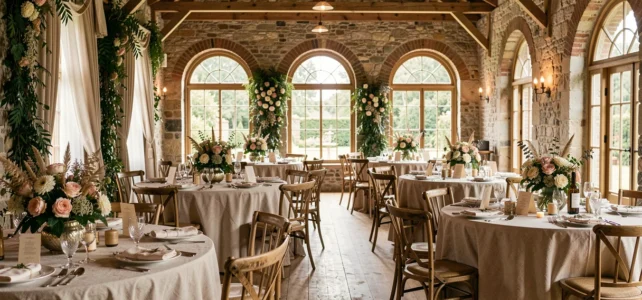
Wedding decoration in 2024 is structured around two axes: reusable scenography and short-circuit sourcing. We are seeing a clear decline in disposable installations in favor of rented or second-hand pieces, repositioned between the ceremony, cocktail, and dinner to enhance visual impact without multiplying volumes.
1. Modular scenography in three stages
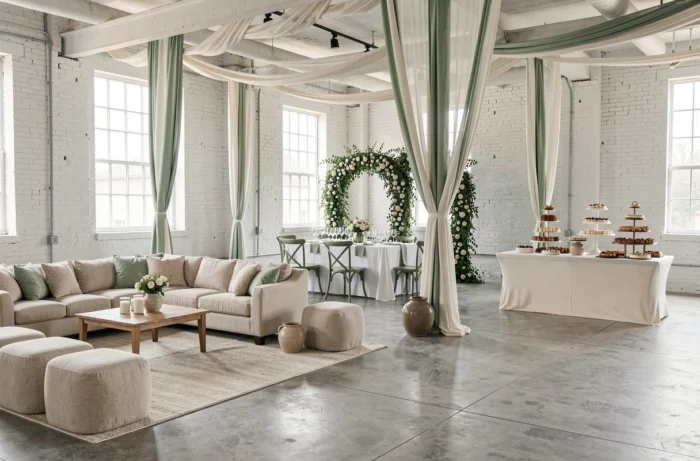
The principle is to design a main decor (arch, plant structure, textile panel) that physically moves from the ceremony to the cocktail, and then to the dinner. Decorators and wedding designers are now working on decorations designed to be movable and reusable across multiple stages of the wedding, which reduces the overall budget and limits waste.
In practice, this requires choosing self-supporting structures that can be dismantled in less than twenty minutes and are compatible with the venue’s constraints. The effect of visual coherence between the three stages of the day enhances the staging much more than an accumulation of distinct pieces.
2. Second-hand and vintage decor
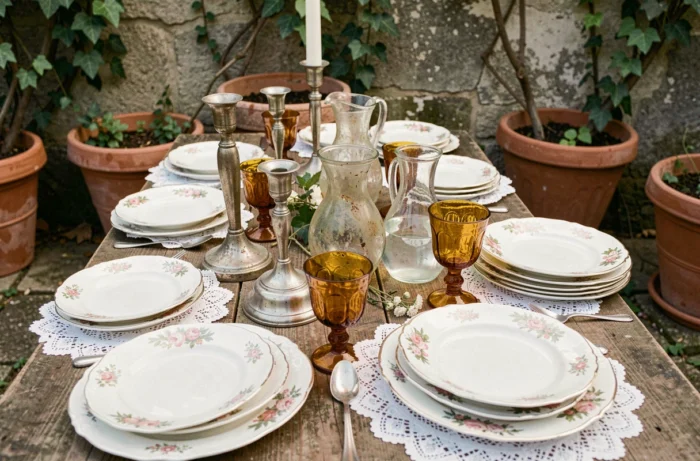
Second-hand weddings are establishing themselves as a defining trend. Rather than buying new for a single day, we recommend sourcing characterful pieces from flea markets, garage sales, and second-hand platforms: mismatched tableware, brass candlesticks, antique frames, embroidered tablecloths.
This approach creates a visually rich table that cannot be replicated with standard rental materials. The cost remains manageable since each piece can be resold after the event. To explore other ideas on decor on the Cœur de Mariage site, the thematic sections detail the style combinations that work in practice.
3. Low-energy scenographic lighting
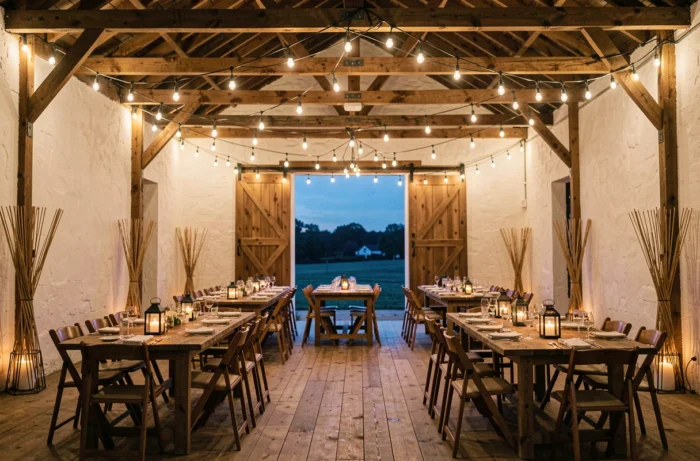
The regulations on the nighttime shutdown of illuminated signs have a collateral effect on weddings: more and more venues impose time and technical limits on outdoor lighting installations (LED starry skies, illuminated facades). Couples must favor subtle and focused lighting atmospheres indoors.
Candles, low-energy garlands, and spot lighting (adjustable spots, gobo projection) replace outdoor LED blankets. The result is often more controlled and more photographic than diffuse lighting without intention.
4. Centerpiece with fruits and citrus
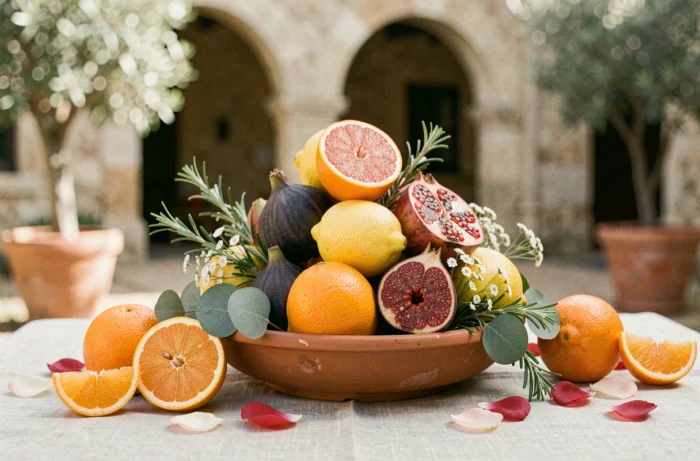
The integration of fresh fruits into table compositions is gaining ground. Lemons, blood oranges, pomegranates, or figs add volume, color, and a texture that flowers alone do not provide.
The technical advantage is twofold: fruits withstand summer heat better than most cut flowers, and their cost per kilo remains significantly lower than that of high-end floral varieties. We pair them with eucalyptus or evergreen foliage for a centerpiece that lasts all evening without wilting.
5. Saturated color palette on a neutral base
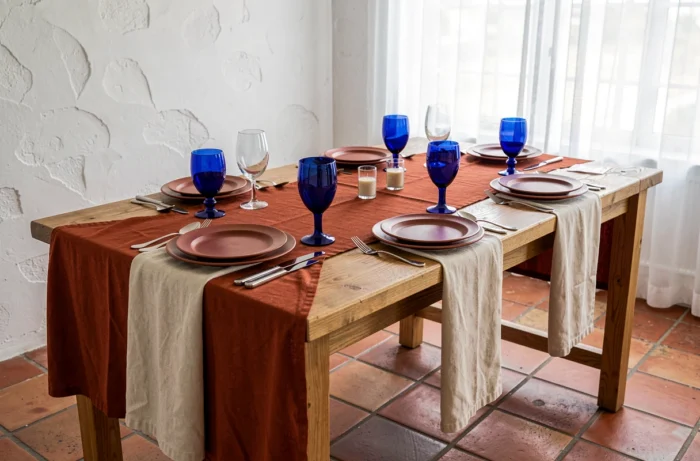
Pastel monochrome palettes are declining in favor of bolder combinations: vivid colors placed on a neutral base (raw linen, light wood, stone). The contrast creates a graphic effect that photographs well without saturating the space.
A common mistake is to multiply strong colors. We recommend limiting the palette to a maximum of two saturated shades, applied to the napkins, flowers, and one stationery element, while the rest of the table remains in natural tones.
6. Artisan stationery and textured supports
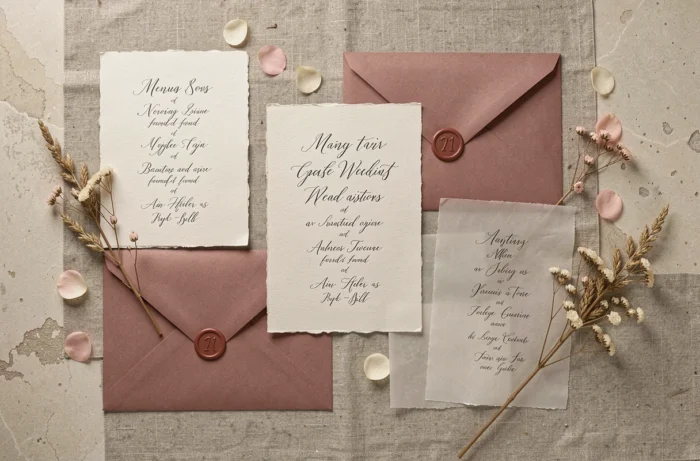
The return of textured paper (laid, cotton, thick kraft) transforms stationery into a decorative element in its own right. Menus, place cards, and seating plans become pieces that guests keep.
The choice of paper weight and texture determines how the support holds on the table. Paper that is too light warps in humidity, while paper that is too rigid does not fit in a standard menu holder. A sufficiently dense weight with a matte finish avoids these two pitfalls.
7. Seating plan on repurposed vintage support
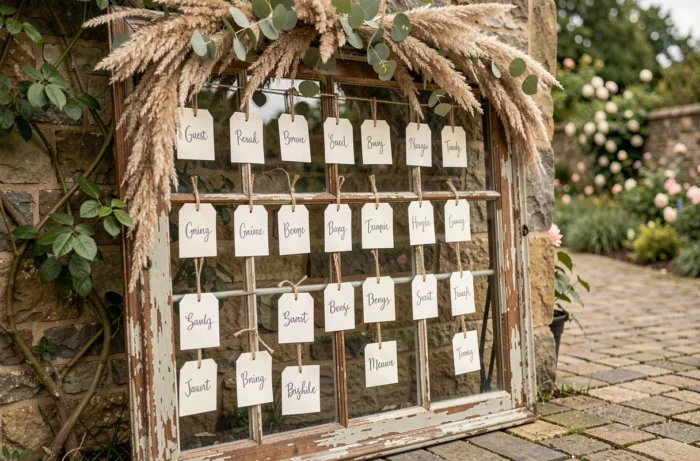
Old windows, gilded mirrors, reclaimed glass doors: the seating plan moves away from the classic easel to be displayed on a second-hand object. This support becomes a photographic focal point at the entrance of the venue.
The technical constraint concerns readability. Chalk lettering on glass works as long as a fixative is applied; otherwise, the text fades with the slightest contact. Calligraphy with a Posca marker on mirror offers better durability.
8. Rental of characterful tableware
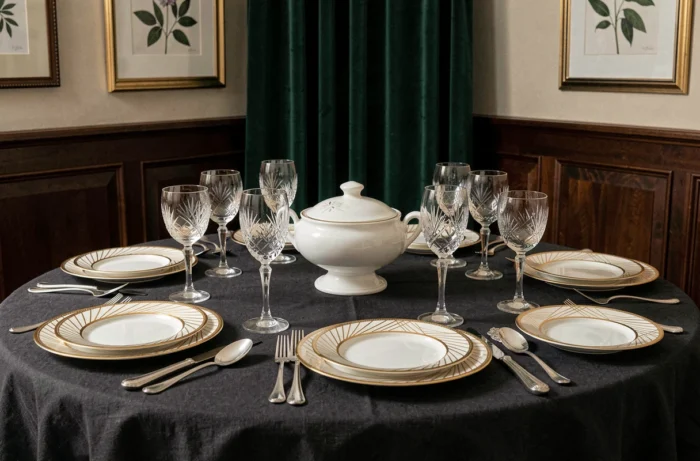
Renting tableware goes beyond mere functionality to become a full-fledged scenographic lever. Stoneware plates, colored blown glasses, gold or matte black cutlery: these pieces transform the table without purchase.
Here are some criteria to check before renting:
- Dimensional compatibility with the venue’s tables (plate diameter compared to cutlery spacing)
- Return conditions (is breakage included in the price or charged extra)
- Delivery and pickup times the next day, which affect the logistical organization on the big day
9. Green wall or foliage curtain
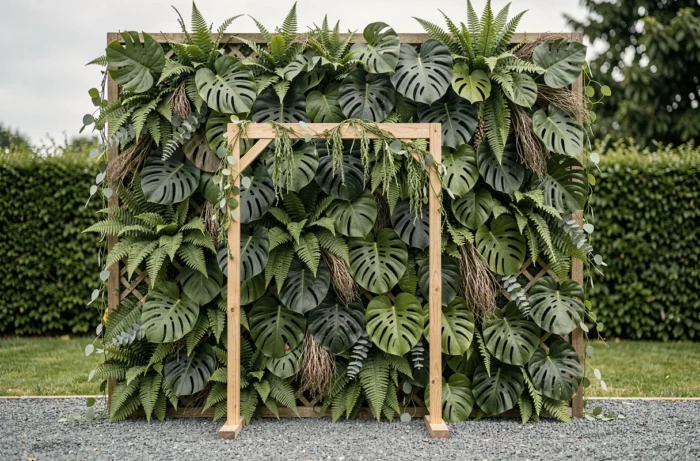
The green wall serves as a photo backdrop, space divider, and decorative element. We favor structures on mesh with evergreen foliage like eucalyptus or ruscus, complemented by a few dried flowers for texture.
The trap to avoid: a wall that is too dense, which blocks air circulation in a closed room during summer. Leaving airy spaces in the composition maintains thermal comfort while preserving the visual effect.
10. Edible and zero-waste guest favors
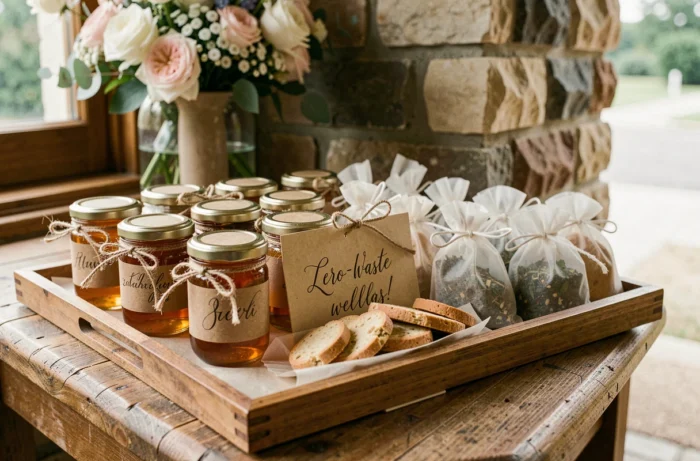
Classic sugared almonds are giving way to personalized edible favors: small jars of local honey, bulk tea bags, artisanal cookies. These choices align with an eco-responsible logic based on reuse and zero waste, as the container is consumed or reused.
The packaging is part of the table decoration. A glass jar with a calligraphed label also serves as a place card, eliminating an additional element and simplifying setup.
The most successful wedding decoration in 2024 relies less on the volume of objects than on the coherence between choices. A clear guiding thread (material, palette, era) applied to every detail produces a more striking result than an accumulation of disconnected ideas.