
A retired couple spots a plot by a lake in Vendée, signs a contract, and sets up their mobile home. Six months later, the manager imposes a replacement after fifteen years. The placement contract did not mention anything like that.
This scenario, reported by several owners in Loire-Atlantique and Vendée, illustrates a point that most guides gloss over: proximity to water is not enough; it is the contractual framework that determines what you can actually do with your plot.
Placement contract by the lake or river: the clauses that change everything
Before comparing prices or locations, you should look at the contract. In camping, you own the mobile home but rent the land. The manager sets the annual rent, the conditions for subletting, and sometimes the brand or maximum age of the mobile home accepted on their land.
Plots by the lake or river in Vendée add a layer of constraints. Some campsites impose a minimum distance between the mobile home and the bank, which varies according to the flood risk prevention plan (PPRI) of the municipality. If the plot is in a flood zone, the manager may require an elevated model or restrict occupancy to the summer season.
Three clauses deserve careful reading before signing:
- The duration of the renewal of the placement contract and the reasons for non-renewal. An annually renewable contract does not guarantee anything in the medium term.
- Restrictions on subletting: some campsites prohibit rental by the owner, while others take a commission that can reach half of the rent received.
- The obsolescence clause or maximum age of the mobile home, which may force you to buy a new model even though yours is still functional.
If you are looking for an offer for sale of a plot of land with mobile home in Vendée by the lake, always check whether the land falls under a classic campsite or a residential leisure park (PRL). The difference is patrimonial.
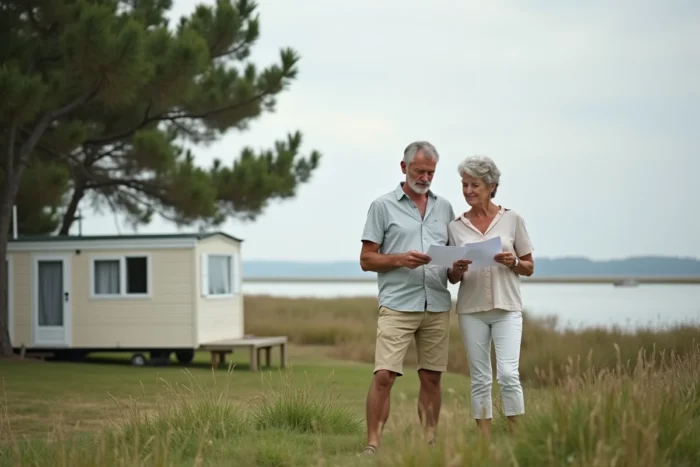
PRL in Vendée: the only formula where you own the land
In a residential leisure park, you buy the plot itself, not just the right to place a mobile home on it. It is a notarized deed, with a title of ownership. The distinction may seem technical, but it conditions resale, transmission, and freedom of use.
A PRL by the river or lake in Vendée operates like a leisure subdivision. You pay condominium fees for the maintenance of common areas, access to water, and sanitation. There is no manager who decides if your mobile home is too old.
Feedback varies on this point, but several owners in PRL report that annual fees remain lower than those of a high-end campsite placement, mainly because there is no commission on subletting. The downside: the offer of PRL by the water in Vendée remains limited, and available plots go quickly.
Non-buildable private land: the classic trap
Buying non-buildable land by a river to place a mobile home is generally prohibited. The law provides for a fine of 1,200 euros per m² built in case of installation on unauthorized land. Coastal and lakeside municipalities in Vendée are increasingly monitoring these installations.
An exception exists through STECAL zones listed in certain local urban plans (PLU), which allow under strict conditions the establishment of mobile or lightweight residences, including by the lake or river. Before any purchase of private land, consulting the PLU at the town hall is essential.
Depreciation of the mobile home and actual costs: anticipate before signing
A mobile home loses value as soon as it is installed. The depreciation reaches 30 to 40% in five years, regardless of maintenance condition. A new model placed on a Vendée plot thus drops below half of its purchase value in less than a decade.
This reality changes the way to approach the budget. One does not think in terms of “real estate investment” but in terms of usage cost over the expected duration of ownership. A well-inspected second-hand mobile home, purchased for between a quarter and half the price of a new one, limits financial loss upon resale.
Expense items to quantify
The purchase price of the mobile home represents only part of the budget. The actual annual costs, all included (plot rent, fees, insurance, tourist tax), range from several thousand to over ten thousand euros per year depending on the standard of the campsite and its coastal or lakeside location.
- The annual rent for the plot varies greatly between a 3-star campsite set back from the coast and a 5-star establishment on the seafront.
- The insurance for the mobile home covers specific risks (storm, flooding by the river) and costs more in exposed areas.
- The transport and installation of the mobile home on the plot represent a one-time but significant expense, especially if access to the water’s edge is narrow or sloped.
- The tourist tax applies if you sublet, and some Vendée municipalities have increased it in recent years.
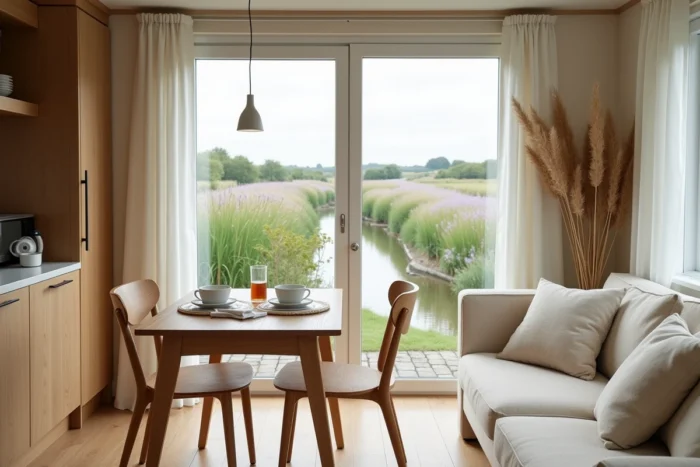
Resale of a mobile home on a plot in Vendée: a market without an official rating
There is no Argus for mobile homes. Resale depends on personal networks, specialized sites, and, in the case of a campsite, the manager’s agreement. Some managers require you to go through their services to resell, with a commission that further reduces the margin.
In PRL, resale is free since you own the land. The mobile home is then negotiated based on its actual condition, without a mandatory intermediary. This is a decisive advantage for those considering holding for five to ten years before reselling.
One last practical point: if the plot is by a lake or river, the appeal of the location can partially offset the depreciation of the mobile home itself. Locations with a view of the water find buyers more quickly than those set back, even with an aging mobile home. The location remains the primary criterion for valuation at resale, more so than the model or year of the mobile home.