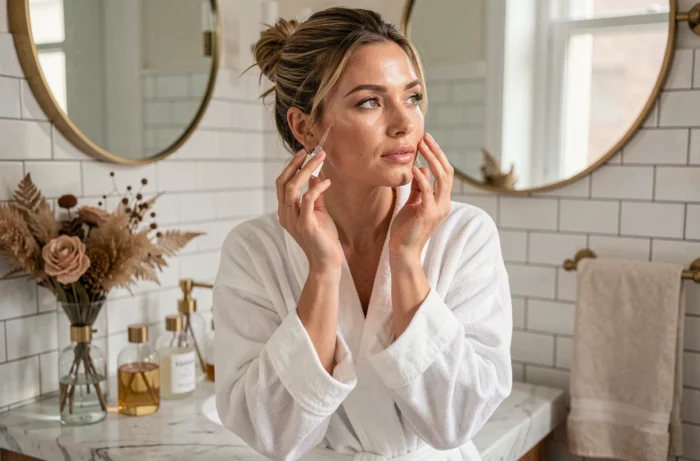
The formulation of skincare is evolving faster than purchasing habits. Between the tightening of European regulations on microplastics, the rise of skin streaming, and a renewed focus on the skin barrier, this season’s beauty trends demand a shift in perspective to adjust one’s routine.
Restriction of microplastics in cosmetics: what is changing in formulation
The Regulation (EU) 2023/2055 has added entry 78 to Annex XVII of REACH. Since October 2023, the first restrictions have come into effect, with a phased timeline extending until 2035. Free glitter, certain exfoliants, and several glossy gel textures are directly affected.
For consumers, this translates into visible reformulations. Plastic microbead scrubs are disappearing in favor of mineral powders or biodegradable particles. Foundations and highlighters with synthetic microparticles are adopting alternatives based on natural mica or silica.
We observe that brands anticipating these restrictions are reformulating without clearly communicating it. Checking the INCI list remains the most reliable reflex: the absence of polyethylene (PE), polypropylene (PP), and polymethyl methacrylate (PMMA) in the first five ingredients confirms compliance with the new requirements.
Professionals following these regulatory developments will find additional analyses on the beauty section of Beauty Boo, particularly regarding the impact of these reformulations on daily product choices.
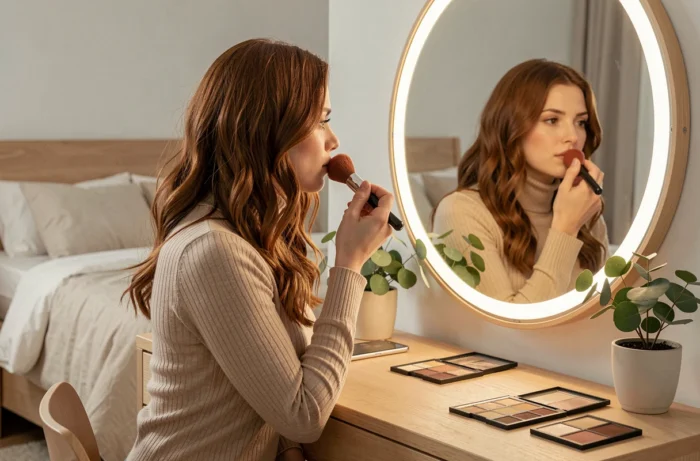
Skin streaming and skin barrier: the beauty routine shifts to fewer, more targeted steps
Skin streaming goes further than skinimalism. While skinimalism suggested reducing the number of products, skin streaming structures the simplification: only retaining those treatments whose effectiveness is proven over time, focusing on performance over several months rather than immediate effects.
The concept of skin barrier 2.0 accompanies this movement. It is no longer just about hydration but actively strengthening the skin’s barrier function. Ceramides, cholesterol, and free fatty acids form the reference trio. A facial cream that combines these three families of active ingredients in balanced proportions effectively replaces a serum, essence, and lotion stacked without coherence.
Active ingredients to prioritize in a streamlined routine
- Type III and VI ceramides, found in dermatological formulations, restore intercellular cohesion better than most plant oils alone
- Moderate concentration niacinamide regulates sebum and enhances skin tolerance without causing irritation, unlike poorly dosed retinoids
- Biomimetic peptides stimulate collagen synthesis over the long term, an area that hyaluronic acid-only serums do not cover
Reducing one’s routine to three or four well-formulated products yields more stable results than an eight-step protocol. The skin undergoes less chemical stress, and the skin barrier restores itself more quickly between seasons.
Makeup and hybrid skincare: foundation, mascara, and cream merge
The boundaries between makeup and skincare are blurring in recent formulations. A foundation that incorporates UV filters, antioxidants, and moisturizing agents is no longer a niche product. It has become a standard that both premium brands and accessible lines are adopting simultaneously.
Mascaras enriched with keratin peptides or castor oil are a good example of this convergence. The goal is no longer just to coat the lash but to nourish it during wear. For lips, tinted balms made with shea butter and mineral pigments are gradually replacing traditional lipsticks in daily routines.
Choosing a hybrid product without compromise
An effective skincare-makeup product meets three verifiable criteria on the packaging:
- The INCI list places the skincare actives (niacinamide, tocopherol, squalane) in the first third, not at the end of the list where their concentration becomes negligible
- The SPF index, when claimed, is validated by a standardized test and not just a marketing mention
- The shade range covers at least fifteen shades, indicating that the formulation has been tested on varied skin tones and not mechanically derived from a single base
A poorly formulated hybrid product remains a bad skincare and mediocre makeup. The dual claim is only valuable if each function is genuinely active at the concentration present in the finished product.

Scalp care and holistic beauty: the scalp enters the facial routine
Scalp care is following the same trajectory as facial care did ten years ago. Exfoliating serums for the scalp, pre-shampoo masks with salicylic acid, and soothing lotions with bisabolol are multiplying in specialized ranges.
This trend is part of a broader movement connecting beauty and overall health. The quality of hair directly depends on the condition of the scalp, just as the glow of the skin depends on the integrity of its barrier. Brands offering personalized scalp diagnostics (sebum analysis, scalp hydration measurement) provide a level of advice that simple shelf purchases do not allow.
The integration of adaptogens like ashwagandha in beauty supplements also reflects this shift. The approach is no longer limited to what is applied: nutrition, sleep, and stress management are becoming recognized parameters in optimizing a skincare routine.
Current beauty trends reward coherence over accumulation. A routine built around a few products, compliant with new regulatory requirements and formulated for measurable results over several months, yields better outcomes than a protocol dictated by the latest viral video. Investing in understanding INCI lists remains the best beauty tip, regardless of the season.