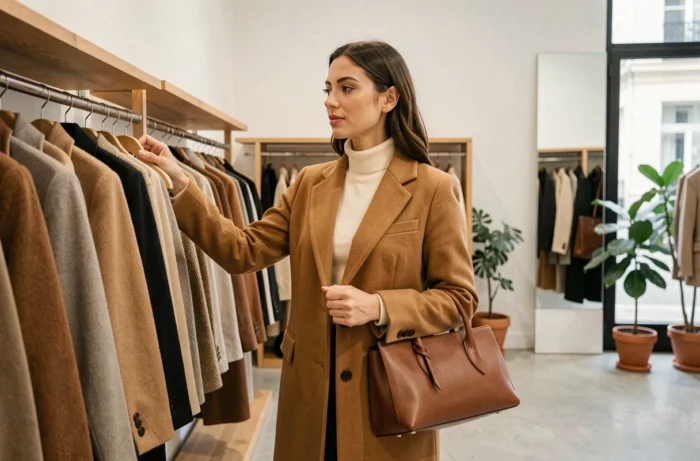
The Pinterest Predicts report and the latest spring-summer 2026 fashion shows outline a season where cultural influences (nautical, Formula 1, Y2K, preppy) are multiplying. Not all of them deserve a place in a functional wardrobe. Here, we propose a methodical sorting between high-rotation pieces and those that are purely for show.
Proportion playing and structured layering: the technique that replaces decorative layering
This season, layering as defined by InStyle relies on a calculated play of proportions. A long coat over a short blazer, a fine-knit top over an open shirt, a satin dress worn over straight pants: each layer modifies the silhouette rather than simply stacking up.
This approach, dubbed proportion playing, imposes a technical constraint. The outer layer must always exceed the middle layer by at least one-third of visible length. Without this ratio, the overall look appears compressed and the silhouette becomes unclear.
We recommend testing layering with a maximum of two pieces before adding a third layer. A short blazer under a mid-length trench remains readable. Three layers of different textures with random lengths tip into costume territory. To follow fashion trends on Clarivox, this principle of layer hierarchy serves as a good filter before any purchase.
Fabrics matter as much as lengths. A ribbed knit under a gabardine creates a coherent tactile contrast. Two fluid fabrics layered (satin over viscose) produce a soft effect that negates the interest of layering.
Fashion trends for 2026: investment pieces versus disposable items
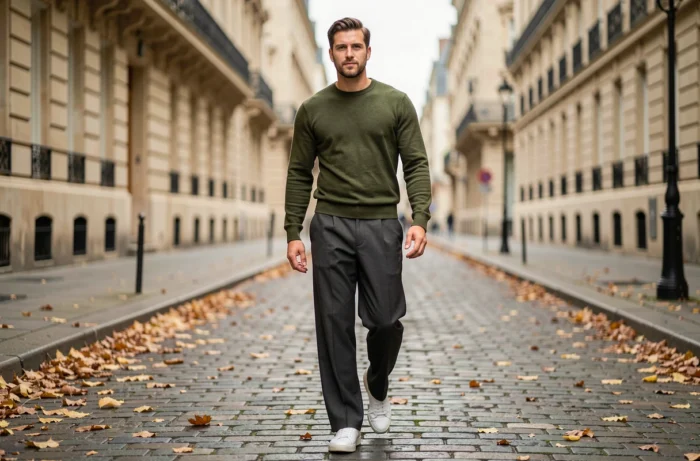
Not all trends have the same lifespan in a wardrobe. Distinguishing long-rotation pieces from those with quick obsolescence prevents impulsive purchases that end up at the back of the closet by the next season.
High-rotation pieces: justified investment
- The long fluid dress, seen at Loewe, Miu Miu, and Saint Laurent, works from the office to the outside with a simple change of shoes. Its straight or slightly flared cut makes it compatible with various body types without alterations.
- The structured wide-leg pants with a defined waist replace jeans in most semi-formal contexts. Its sharp cut with a loose fall creates volume below without flattening the silhouette, provided a fitted top is worn.
- The short blazer (waist length) serves as a pivot piece for layering and can be worn alone over a t-shirt in mid-season. It is the most versatile jacket in the wardrobe this season.
Short-lifespan pieces: caution
- Formula 1 references (racing logos, side stripes, pilot cuts) are already saturating streetwear collections. Their cultural readability is too pronounced to survive two seasons.
- Full neon, driven by the Y2K revival, attracts attention in editorials but poses a combination problem in a real wardrobe. A neon accessory works, a total neon look dates within months.
- All-over crochet details (dress, set, bag) remain very summer-specific and lose all relevance by September.
Fashion colors for 2026: a restricted palette rather than a rainbow collection
The runways simultaneously showcase butter yellow, olive green, sky blue, pink, and orange. Adopting all these shades means completely renewing your wardrobe, which makes no economic or stylistic sense.
We recommend choosing a single strong color per season and applying it to two or three coordinated pieces. Butter yellow, for example, works on a knit sweater, linen pants, and a bag. Three pieces are enough to create several outfits without saturating the wardrobe.
Olive green has the advantage of compatibility with existing neutrals (white, black, beige, navy). It is the least risky color for a first colorful purchase. Bright pink and orange require more skill: they demand a strong contrast with the rest of the outfit, or they risk producing a heavy monochrome effect.
Preppy style and revisited nautical codes: what works in daily life
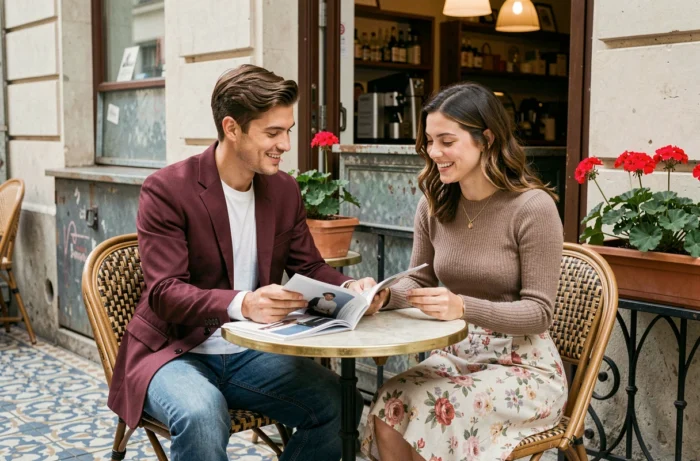
Preppy style (polo collar, tennis stripes, loafers) and nautical codes (striped shirt, gold buttons, navy blue) are among the most cited influences for 2026. Their advantage: they rely on classic pieces already present in many wardrobes.
The trap lies in accumulating codes. Wearing a striped shirt with a blazer with gold buttons and pleated pants creates a costume, not an outfit. The operational rule: one thematic code per outfit, the rest in neutral pieces.
A striped shirt with raw jeans and white sneakers remains a daily outfit. The same striped shirt under a navy blazer with gold buttons, paired with a tied scarf, tips into re-enactment. The line between stylistic reference and costume lies in this limit of one code per ensemble.
Coordinated women’s set: the alternative to the total thematic look
The coordinated set (top and bottom in the same fabric or shade) emerges as the practical response to the need for effortless coherence. It eliminates the question of piece pairing while producing a clean visual effect.
Its technical interest is also its limitation. A coordinated set is only worn complete or separated with basic pieces. Pairing the top of a floral set with the bottom of a solid set creates a dissonance that layering does not correct.
To maximize rotation, we recommend sets in linen or structured cotton, in solid shades. They separate easily: the pants work alone with a t-shirt, the jacket with jeans. Sets with strong patterns (wide checks, tropical prints) offer less flexibility and visually wear out faster.
The 2026 season multiplies proposals, but a solid wardrobe relies on five to seven well-chosen pieces rather than fifteen scattered purchases. Prioritizing compatibility between pieces, limiting thematic codes to one reference per outfit, and testing layering on simple combinations before complicating remains the most reliable method to integrate trends without turning your wardrobe into a fleeting collection.