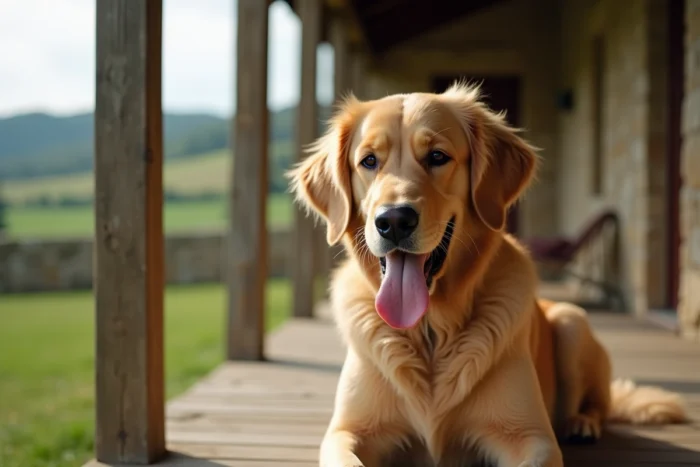
Searching for a Golden Retriever puppy in Bourgogne-Franche-Comté means navigating between generic directories and breeder pages that are not always up to date. The region has a handful of registered breeders spread across several departments, with very variable practices from one kennel name to another. Comparing these structures requires going beyond simple geographical location to examine what truly distinguishes a reliable breeder from an ad without guarantees.
Selection Criteria for a Golden Retriever Breeder in Bourgogne-Franche-Comté
Before listing names, it is essential to establish a framework for evaluation. Not all breeders are equal, and the difference is not just in the price of the puppy.
| Criterion | What to Check | Warning Sign |
|---|---|---|
| LOF Registration | Puppies registered with the LOF, confirmed parents | Label “Golden type” without papers |
| Health Tests | Hip/elbow dysplasia screening, eye examination | No screening documents available |
| Socialization | Documented protocol, regular human interactions | Puppies isolated, little handling before transfer |
| Living Conditions | Outdoor access, size of enclosures, enrichment | Cramped facilities, lack of outings |
| Transparency | Possible visit to the breeding facility, introduction of parents | Refusal of visit, handing over the puppy in a parking lot |
A breeder that checks all these boxes does not guarantee the perfect puppy, but it significantly reduces the risks of behavioral or health problems in the medium term. To identify the structures that meet these requirements in the region, the breeders recommended by La Fibre Câline provide a documented starting point.
LOF Golden Retriever Breeders: What the Geographical Distribution Reveals
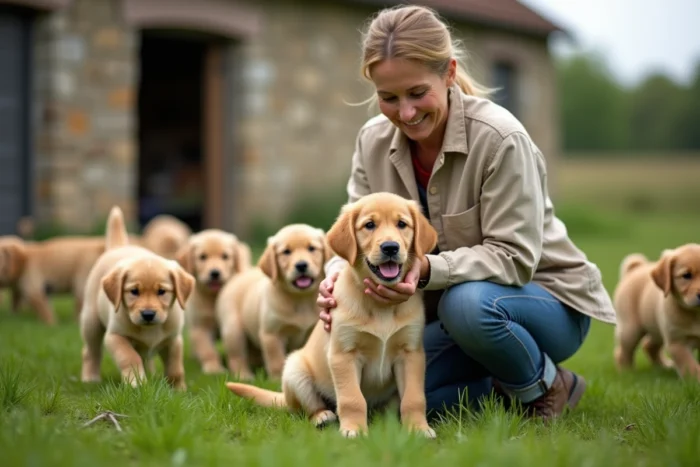
Directories like Chiens de France or unCompagnon list about ten Golden Retriever breeders in Bourgogne-Franche-Comté. Saône-et-Loire hosts several structures, including Élevage Du Joli Bois in Saint-Christophe-en-Bresse, which shows regular activity with puppies exclusively LOF.
Other kennel names appear in Doubs, Jura, or Côte-d’Or, but with very uneven litter frequencies. Some breeders produce only one to two litters per year, which extends reservation times to several months.
On the other hand, the low density of breeders in certain departments (Nièvre, Haute-Saône, Territoire de Belfort) pushes prospective owners to widen their search to neighboring regions. A breeder located in Rhône-Alpes or Île-de-France may be closer than a distant Burgundy kennel name from your home.
Family Breeder or Professional Breeder
The distinction is not trivial. A family breeder produces few litters and socializes in a home environment. Puppies grow up exposed to everyday noises, children, and sometimes other animals. This setting fosters a balanced temperament, particularly sought after in Goldens.
A professional breeder with multiple breeds and frequent litters may offer rigorous health monitoring, but socialization then entirely depends on the protocol in place. The size of the structure alone does not indicate the quality of the puppies produced.
Regulations and Sale of Golden Puppies: What Has Changed
As of January 1, 2024, the sale of dogs in pet shops is prohibited in France. This measure repositions registered breeders as the only legal channel for acquiring a purebred puppy. In Bourgogne-Franche-Comté, this means that buyers must go through a professional breeder or a registered individual.
Identification by microchip remains mandatory for any transfer, whether free or paid. A breeder who does not provide an identification certificate at the time of handing over the puppy is breaking the law. This document, along with the veterinary health certificate and transfer certificate, forms the minimal traceability foundation.
Animal Welfare: Expectations Are Rising
Beyond the strict regulatory framework, breeding practices are evolving under societal pressure. French breeders are increasingly encouraged to document their socialization protocols, living conditions, and enrichment provided to puppies.
During a breeding visit, several elements deserve particular attention:
- The size and cleanliness of living spaces, with daily outdoor access for puppies and breeding dogs
- The opportunity to meet at least one of the parents to assess temperament and general condition
- The existence of a structured socialization protocol (exposure to noises, regular handling, contact with other animals)
- Communication of genetic and orthopedic screening results of the breeding dogs
Common Pitfalls When Searching for a Golden Retriever in Bourgogne
The Golden Retriever remains one of the most popular breeds in France, which also attracts unscrupulous sellers. A few signals should raise suspicion.
An abnormally low price compared to the rates charged by registered breeders in the region often hides a lack of health tests, a failure in socialization, or non-LOF puppies presented as “purebred.” A puppy without LOF registration cannot be sold as a Golden Retriever: the law requires that only dogs registered in a recognized pedigree book can bear the name of their breed.
Ads on social media or general classifieds websites present an increased risk. The absence of a SIREN number, mention of the kennel name, or photos of the facilities should raise alarms. A serious breeder always accepts a visit on-site before reservation.
Reservation Times to Anticipate
With few active breeders in the region and spaced litters, reservation times often exceed six months with the most sought-after breeders. Some structures, like Élevage Du Joli Bois, report ongoing reservations for their upcoming litters as soon as the mating is announced.
Planning for this delay prevents the temptation to resort to a less reliable source out of impatience. A breeder who has “immediately available” puppies year-round deserves a thorough check of their practices.
The Golden Retriever market in Bourgogne-Franche-Comté remains a market of limited supply. Patience and methodical verification of health, behavioral, and regulatory criteria remain the two best filters for finding a puppy in good conditions.