
Daily escape does not rely on a plane ticket. It depends on the ability to trigger a mental disengagement from a calibrated stimulus: a text, an image, a structured narrative. We observe that the articles that are truly effective in creating this pause share specific narrative mechanisms, far removed from the simple advice of “read a good book.”
Mental pause in daily life: the mechanisms that work in an inspiring article
An article that inspires dreams is not one that talks about dreams. The distinction is technical. The text must produce sensory immersion in less than three sentences, otherwise the reader disengages and returns to their news feed.
The most effective content in terms of escape mobilizes what editorial storytelling calls the context-detail progression: starting from a broad frame (a landscape, an atmosphere, a season) and narrowing down to a concrete micro-element (a smell, a sound, a texture). This sensory mechanism transforms passive reading into a projected experience.
Articles that merely list destinations or reading ideas often fail on this point. They inform without immersing. For content to become a pause, it must offer a staging of the dream, not just a theme related to travel or escape.
We recommend selecting articles that meet at least three of these characteristics:
- A sensory hook from the very first paragraph (sound, smell, light) that anchors the reader in a specific place or moment
- A format long enough to establish a slow reading rhythm, between travel narrative and personal essay
- A first-person or intimate voice narration, creating a sense of intimacy rather than an encyclopedic tone
- Detailed visual descriptions that allow the brain to “build” the scene, as a novel would
To explore more of this type of content, similar articles on Babouchka.net compile texts that adhere to this structured micro-escape logic.
Selection of articles for escape: what distinguishes an immersive narrative from a simple guide
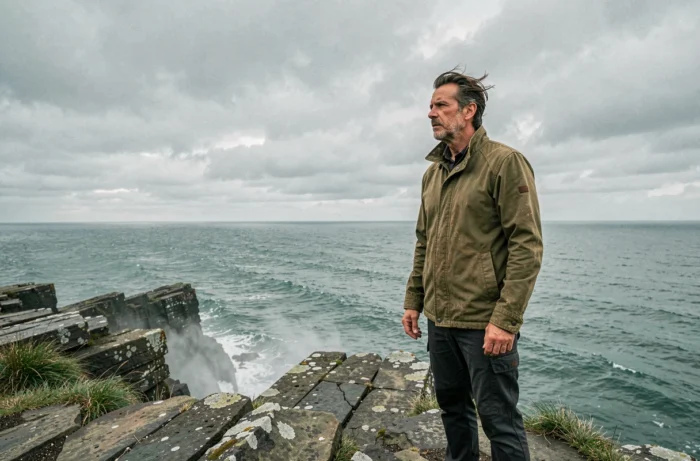
The editorial market is full of content labeled “escape” or “inspiration.” The majority remains superficial. A guide listing ten paradise beaches does not produce the same effect as a three-page narrative about a morning in a Cycladic village.
Narrative depth takes precedence over the number of destinations mentioned. A single well-told place is worth more than ten places skimmed over. Pocket editions and collections of short narratives have understood this: the short and dense format, between short story and travel diary, generates a more intense escape than a lengthy article without substance.
Among the editorial formats that create a true break from daily life, the epistolary narrative (fictional or real letters from a place) and the logbook remain underutilized online. These formats impose a different reading rhythm, closer to a novel, which forces the brain to slow down.
Books and short narratives: the pocket format as a tool for quick escape
The pocket book remains the most accessible means of escape. Collections of travel narratives in pocket format (from several French publishers) offer texts calibrated for reading in one to two hours. This format corresponds exactly to the duration of an effective mental pause.
Novels set in a specific and real place work better than fantastical narratives for geographical escape. The reader projects onto a world they could theoretically visit, which enhances the immersion effect. A novel set in rural France can produce as much disorientation as an exotic narrative, provided that the descriptive density is present.
Building an editorial escape routine without leaving your desk
Escape through reading is cultivated as a skill, not as a happy accident. Professionals in wellness content and specialized media librarians structure their recommendations around reading rituals rather than simple lists.

The principle is simple: associate a fixed moment of the day with a specific type of content. A deep article in the morning with coffee. A short narrative during the lunch break. A photographic diary in the evening. This regularity transforms escape reading into a neurological habit, rather than a vague intention.
Content ideas to integrate into a daily selection
The diversity of formats matters as much as the individual quality of each article. Alternating genres prevents saturation:
- Life stories in atypical places, written by authors who have stayed there for several months (not passing tourists)
- Editorial photographic articles where the progression of images tells a story without text, from broad context to intimate detail
- Seasonal chronicles rooted in a specific terroir, which transport through sensations (autumn light in Ardèche, winter markets in Alsace)
- Portraits of local artisans or creators, whose living environment becomes an object of fascination
This editorial approach aligns with what some specialized media like EnVols explore: an editorial line entirely constructed around departure imaginations, where each article functions as an autonomous sensory invitation.
Inspirational articles and well-being: the link between escape reading and cognitive decompression
Immersive reading induces a slowing of the heart rate and a decrease in muscle tension within minutes. This phenomenon, documented in the field of reading neuroscience, explains why a well-written article about a Provençal market can produce a relaxation effect comparable to a short nap.
An effective inspiring article acts as a decompression chamber between two blocks of activity. For those in coworking or remote work, integrating a micro-escape reading between two intense work sessions represents an underestimated cognitive recovery lever.
The choice of content matters as much as the timing. Articles with an anxiety-inducing tone (even on travel topics) produce the opposite effect. A travel narrative focused on logistical woes does not inspire dreams; it stresses. Favor texts where the narrative tension remains low and the sensory load is high.
Editorial escape does not replace vacations or physical rest. It offers a complementary tool, accessible without budget or planning, that transforms a few minutes of reading into a true mental disengagement. The only prerequisite: choose articles whose narrative quality justifies giving them your full attention.