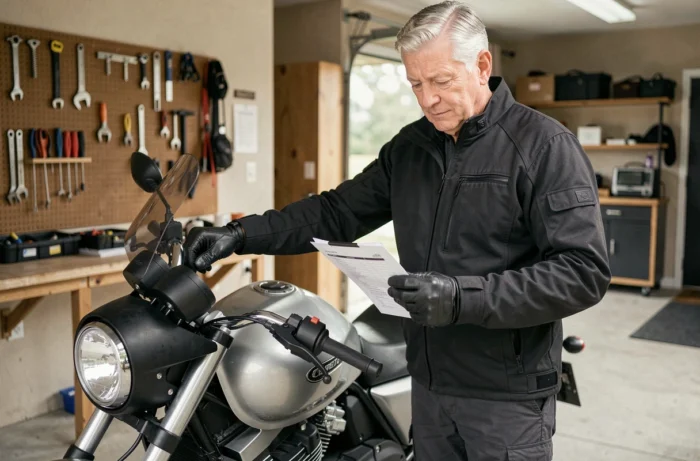
Getting back on the handlebars after one or two decades of stopping does not pose the same problems as a first learning experience. The body has changed, reflexes have dulled, and the road has evolved (infrastructure, traffic density, behavior of other users). Resuming motorcycling at 60 requires a methodical approach, focused on managing physical risk as much as on riding technique.
Brittle bones and the consequences of a motorcycle fall after 60
A low-speed fall on a two-wheeler that seemed harmless at 30 radically changes in severity after 60. Data from the National Interministerial Road Safety Observatory (ONISR) confirms a clear trend: mortality among those aged 65 and over has risen by 13% compared to 2019. The number of serious injuries in this age group has increased by 16% over the same period.
This excess mortality is not solely explained by road behavior. Bone density decreases with age, healing times lengthen, and a fracture of the pelvis or femur at 62 often leads to months of rehabilitation. We recommend integrating this parameter right from the choice of motorcycle: a low center of gravity reduces the risk of falling when stationary, which is the most common situation for those returning to riding.
Choosing a model with a seat that allows both feet to be flat on the ground is not a compromise on comfort. It is a decision that directly stems from managing physical fragility. Before even considering engine size or power, the question that conditions everything else is the ability to regain balance when stationary, whether by using the kickstand or maneuvering in a parking lot.
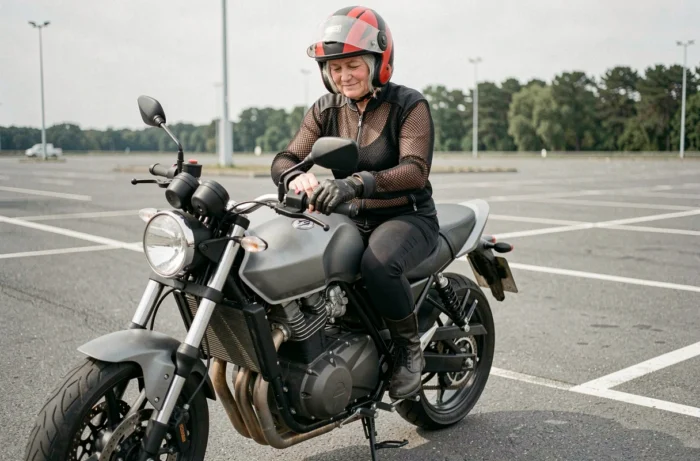
Motorcycle school training and refresher courses for senior riders
The motorcycle license obtained thirty years ago remains valid, but it does not guarantee anything in terms of reflexes. Several motorcycle schools now offer refresher courses specifically designed for returning riders. These training sessions, distinct from the classic A2 license curriculum, focus on slow maneuvering, emergency braking, and information gathering in traffic.
We observe that the decision to resume motorcycling at 60 often comes with an overconfidence linked to past experience. Braking reflexes, reading trajectories in curves, and anticipating intersections deteriorate after a long break. Two to three supervised sessions on a closed course followed by on-road practice are usually sufficient to identify real gaps.
A rarely discussed point: peripheral vision and information processing speed decrease with age. A recent eye exam (less than six months old) and, if necessary, a hearing check should precede any ride on open roads. This is not a mere administrative formality; it is an element of active safety.
Choosing the right motorcycle for a return after 60
The market today offers machines that did not exist twenty years ago and that precisely match the profile of senior returners. Three technical criteria deserve priority consideration:
- Weight fully fueled under 200 kg: beyond this, low-speed maneuvers and lifting after a fall become problematic for someone over 60
- Seat height between 760 and 800 mm: this affects stability when stopped and confidence in parking maneuvers
- Presence of ABS as standard (mandatory on new motorcycles since 2016) and, ideally, traction control: these electronic aids partially compensate for slowed reflexes
Medium-displacement road trails (around 650-700 cm³) and some restricted roadsters combine these characteristics. On the other hand, we advise against jumping straight back onto a sportbike or a large custom motorcycle, as their weight and ergonomics exacerbate every handling error.
Used motorcycle: specific points of vigilance
A well-inspected used model is perfectly suitable for a return. Check the condition of the suspensions (fork seals, rear shock), the manufacturing date of the tires (a tire over five years old loses grip even if it looks visually new), and the maintenance history. Worn tires are the leading cause of avoidable loss of grip.
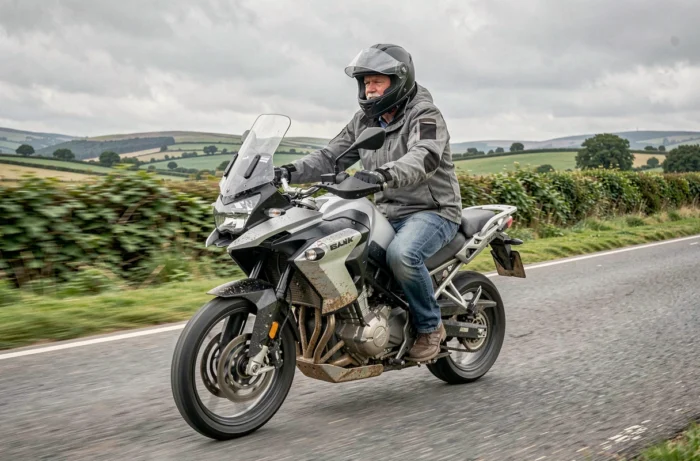
Motorcycle safety gear: standards and protections for senior riders
Equipment has evolved significantly. Current materials offer a level of protection that is incomparable to what existed in the 1990s. Here are the elements on which one should not compromise:
- ECE 22.06 certified helmet (current standard), with particular attention to weight: a lightweight helmet (under 1,400 g) reduces neck fatigue on long trips
- Jacket or coat with CE level 2 certified back, elbow, and shoulder protections, and a removable thermal lining for year-round riding
- CE certified gloves (mandatory in France) with protective shells over the metacarpals
- Motorcycle airbag (vest or integrated into the jacket): this technology significantly reduces the severity of thoracic and back impacts, a crucial point for a senior rider whose rib cage is more fragile
The equipment budget represents a significant investment, but it directly affects the severity of injuries in case of a fall. We consider the motorcycle airbag to be the most relevant expense for a returner over 60.
Managing the first rides and progression on the road
The first kilometers after years of stopping should not take place in dense urban traffic or on the highway. Prioritize low-traffic departmental roads in dry weather conditions, during calm time slots.
Limit outings to a maximum of 45 minutes during the first two weeks. Muscle fatigue (forearms, neck, lower back) appears more quickly than anticipated after 60, and it degrades concentration well before the rider realizes it.
Riding in a group from the first outings is a common mistake. Group pressure encourages riding above one’s actual level. Progression should be done alone or in pairs with an experienced rider who can adjust their pace.
Returning to two wheels at this age is not a gamble. It is a project that should be prepared like a sports season: physical assessment, supervised training, suitable equipment, and gradual increase in load. The safety margin is built before the first turn, not after.