
An unknown number appearing on a mobile phone screen triggers an immediate choice: answer or ignore. Since August 11, 2026, French law prohibits any commercial telemarketing without explicit prior consent from the consumer. This opt-in regime changes the game: the vast majority of unsolicited calls from unknown numbers no longer have any legal basis. Understanding this framework allows for a methodical response rather than a reflexive one.
Opt-in and consent: what the law requires of telemarketers since 2026
The law of June 30, 2025, and the decree of July 23, 2026, replaced the Bloctel system with a stricter mechanism. A professional can no longer call an individual to offer a product or service unless that person has given their prior consent.
This consent must be free, specific, informed, and unambiguous. It remains valid for a maximum of one year and can be withdrawn at any time. The professional must be able to prove that they have this agreement.
The penalties are deterrent: up to 75,000 euros in fines for an individual and 375,000 euros for a legal entity, per irregular call. Knowing these rules helps to adopt the right reflexes when facing unknown calls by knowing precisely what the caller is allowed (or not allowed) to do.
One exception remains: calls directly related to an ongoing contract (delivery confirmation, issue with a service, reservation follow-up). These calls are still permitted without prior consent because they relate to an existing commercial relationship.

Identifying a suspicious call on a smartphone: prefixes and warning signals
Not all unknown calls are telemarketing. Some numbers signal an attempted scam, particularly vishing (voice phishing). This technique involves impersonating a bank advisor, a tax agent, or a police officer to extract personal or banking information.
Signals that should raise alarms
- A caller asking for a credit card number, a validation SMS code, or a login ID for your online accounts. No bank or public service requests this information by phone.
- An artificial sense of urgency: you are informed of suspicious activity on your account, a blocked package, or an imminent summons, and you are pressured to react within seconds.
- A displayed number that resembles that of your bank or an official service. The spoofing technique allows the displayed number on your screen to be falsified to inspire trust.
- A very brief call followed by an SMS inviting you to call a premium rate number or click on a link.
In response to these signals, the safest response is to hang up without providing any information, then call the concerned organization using the number found on your official documents or on the verified website.
Reacting during the call: the question that destabilizes an illegal telemarketer
If you answer a commercial unknown call, a single question is enough to test the legality of the approach: ask the caller where and when you gave your consent to be contacted. Since the implementation of the opt-in, the professional must be able to provide this proof.
The absence of a clear response, stammering, or a change of subject confirms that the call is irregular. Hang up without guilt. Prolonging the conversation, even to express a polite refusal, feeds the databases of call centers: a number that answers is an “active” number that will be called back.
Reporting abusive telemarketing
After hanging up, report the call via the official consumer fraud reporting platform, selecting the category “abusive telemarketing.” This report feeds into the controls of the DGCCRF and helps identify offending companies.
For unsolicited SMS, the reflex remains to forward the message to 33700, the spam reporting system for SMS.
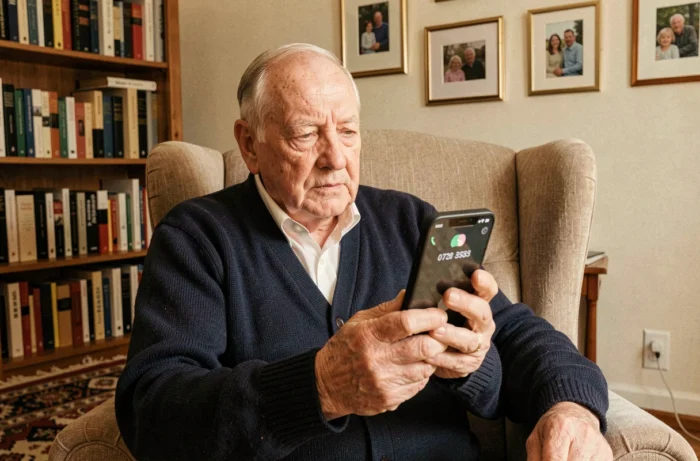
Setting up your phone to filter unknown calls
The native settings of smartphones allow for a significant reduction in nuisances without installing third-party applications.
On iPhone
The “Silence Unknown Callers” feature (Settings > Phone) sends any call from a number not in your contacts, call history, or Siri suggestions directly to voicemail. The call remains visible in the log, but the phone does not ring.
On Android
The Google Phone app includes a spam filter that automatically identifies numbers reported by the community. Enable “Filter unwanted calls” in the app settings. Some manufacturers add their own filtering layers in the call settings.
These filters are not perfect. A legitimate call from a new number (medical office, tradesman, delivery) may be blocked. Regularly check your filtered call log to avoid missing an important call.
SMS and messaging: the regulatory blind spot
The 2026 law targets voice calls. Commercial SMS and messages via messaging applications are not covered by the same prohibition. Companies are already circumventing the framework by shifting their prospecting to these channels.
In the face of a suspicious SMS, do not click on any links or call any number indicated in the message. Forwarding to 33700 remains the most direct reporting action. For scams via instant messaging (fake bank advisors on WhatsApp, phishing attempts on Telegram), the Thésée platform of the Ministry of the Interior allows you to file an online complaint for fraud.
Being vigilant about personal data shared online also limits exposure to unwanted calls and SMS. Every form filled out, every newsletter subscription, or every participation in a contest can feed prospecting files sold to third parties, including outside the legal framework.
Technical filtering on smartphones and the legal framework of opt-in form two complementary barriers, but neither is foolproof. Maintaining the reflex of never sharing personal or banking information during an incoming call remains the most reliable protection, regardless of the number displayed on the screen.