
A collision in a parking lot, a failure to yield at an intersection: the report is filled out, and the other driver’s liability is beyond doubt. The surprise comes a few days later when the insurer still applies a deductible to the compensation. This mechanism, often misunderstood, generates a growing volume of disputes between insured individuals and insurance companies.
The mechanism of recourse between insurers and its effect on the deductible
Most guides explain who is responsible and who is not. Few detail the financial circuit that is triggered after the claim is reported, yet it is precisely this circuit that determines whether the deductible remains the responsibility of the non-responsible insured.
When an accident involves two insured vehicles, the companies first settle with their own insured based on the coverage purchased. They then rely on the IRSA agreement (Direct Compensation of the Insured and Recourse between Insurance Companies) to reimburse each other. Specifically, your insurer pays for the repairs, applies the deductible specified in the contract, and then seeks recourse against the insurer of the at-fault third party.
If the recourse is successful, the deductible in the case of a non-responsible accident is refunded to you. The time frame varies depending on the responsiveness of both companies, as well as the clarity of the amicable report. A poorly filled out or disputed report can block the recourse for several months, leaving the deductible at your expense in the meantime.
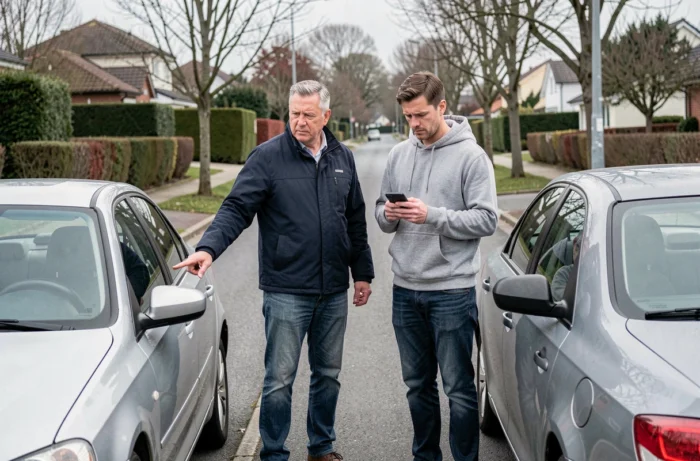
Car deductible and unidentified third party: the trap for insured individuals
The scenario changes radically when the responsible driver is not identified. Hit-and-run, parked vehicle damaged without a witness, collision with a wild animal: in these situations, there is no opposing insurer to bear the cost.
Without an identified third party, the deductible remains definitively the responsibility of the insured, regardless of the coverage purchased. Comprehensive contracts cover damage to the vehicle but apply the contractual deductible without the possibility of recourse. Third-party contracts, on the other hand, simply do not cover material damage to the insured vehicle in this scenario.
The only truly effective protection in this case is a specific guarantee, sometimes called “zero deductible” or “deductible buyback,” which eliminates or reduces the remaining amount owed. Before subscribing, it is essential to check the application conditions:
- Some buyback options only work if a responsible third party is identified, making them useless precisely in the most problematic case
- Others cap the reimbursement of the deductible at a fixed amount, sometimes lower than the deductible itself for glass breakage or theft coverage
- Some contracts provide for full buyback, including in the case of an unidentified third party, but with an annual surcharge that should be compared to the actual amount of the deductible
Disputes over liability: when the insurer contests your version
Shared liability constitutes another frequent trap. Even when a driver considers themselves completely not at fault, their insurer may retain a share of liability based on the amicable report or police report. A 50/50 split, for example, means that the deductible applies as if the insured were partially at fault.
The Insurance Mediation has recorded a 19% increase in cases in 2024, with over 36,500 cases processed. Auto disputes often revolve around the qualification of liability and the coverage of material damages. The mediator sided with the insured, either fully or partially, in 55% of cases. This figure shows that refusals of compensation or the retention of a deductible are not always legally justified.
Contesting a decision made by one’s insurer remains a step that few insured individuals undertake. Several levers exist:
- Check the box ticked on the amicable report: a cross error can reverse the liability retained by the insurers
- Request in writing from your insurer the IRSA scale applied to the claim, in order to understand on what basis liability was allocated
- Contact the Insurance Mediation if the written claim remains unanswered favorably within two months
The amicable report remains the central document
A report signed by both parties and correctly filled out speeds up the processing of the case. Boxes 1 to 17 on the front describe the standardized circumstances of the accident. Ticking the wrong box means accepting a liability that you contest. In case of disagreement with the other driver when filling out the document, it is better not to sign and to request intervention from law enforcement.

Car insurance contract: read the deductible before the claim
The deductible is not a single amount. The same contract may provide for different deductibles depending on the activated coverage: collision, theft, glass breakage, natural disaster. The amount of the deductible varies according to the coverage, not according to liability.
Some insurers offer a fixed deductible (an amount in euros), others a proportional deductible (a percentage of the damage amount), and sometimes a combination of both with a floor and a ceiling. Reading the specific conditions of the contract before any claim allows for anticipating the actual remaining amount owed and assessing whether a deductible buyback option is economically justified.
An insured individual who drives little and parks in a closed garage does not have the same risk profile as an urban driver exposed to daily collisions. The calculation of the relevance of a deductible buyback directly depends on this exposure, rather than on a generic advice applicable to all profiles.
The question of the deductible in a non-responsible accident boils down to a simple mechanism but with variable applications: recourse against the third party works when that third party is identified and insured, and fails in all other cases. Checking your contract, correctly filling out the report, and knowing the avenues for recourse in case of disagreement remain the three points that truly make a difference in the final amount to be paid.